

Thank You for Helping Us Restore the Delhi Sand Dune Habitat
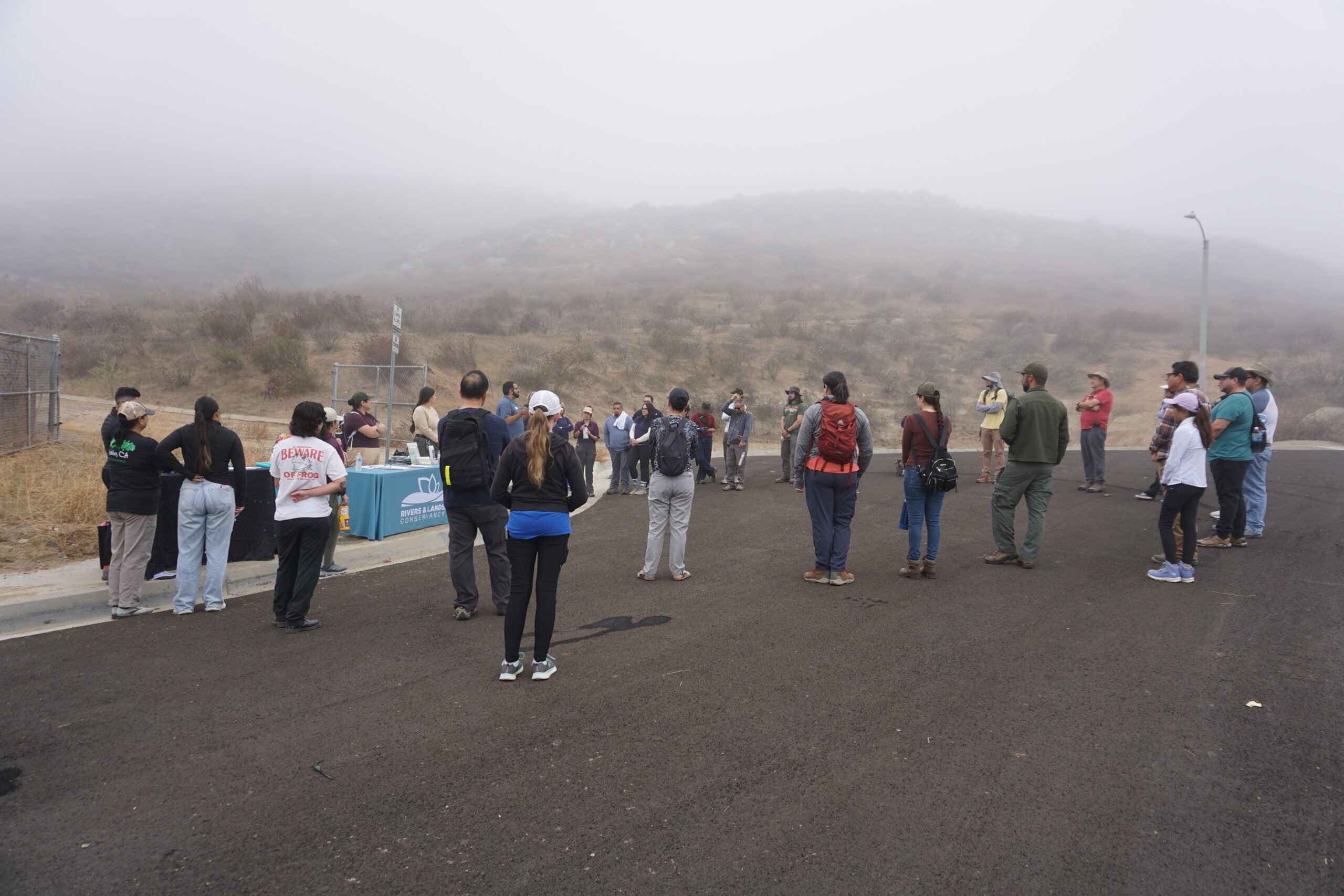
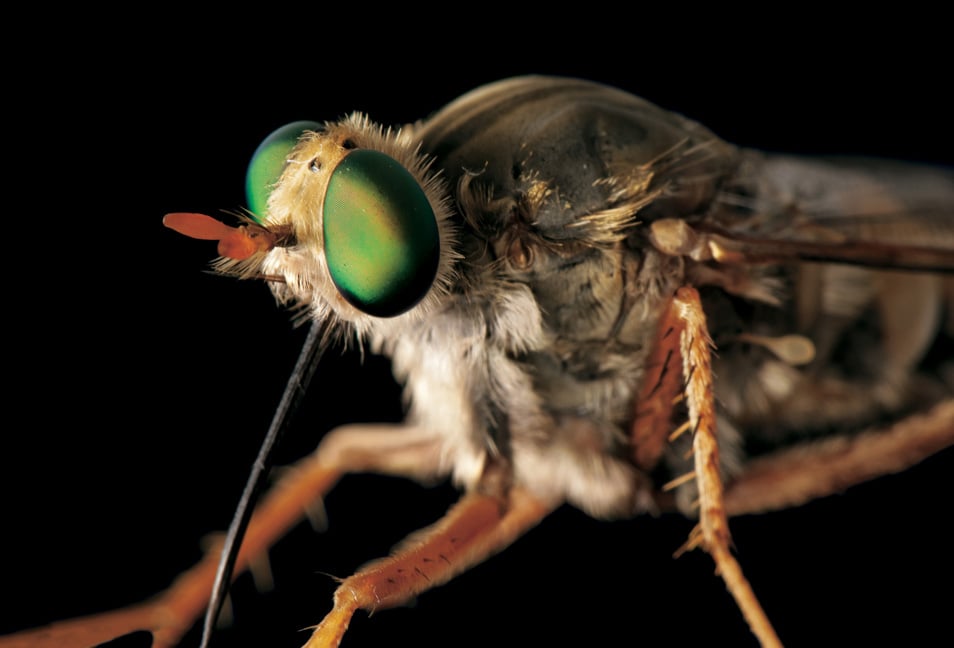
Fog misted over the cul-de-sac as volunteers trickled in bright and early. The Western Riverside County Regional Conservation Authority (RCA) in partnership with the Rivers & Lands Conservancy (RLC) and the Riverside County Regional Park and Open-Space District (RivCo Parks) hosted a volunteer event in October with the goal of restoring habitat for the Delhi Sands flower-loving fly and other important wildlife that inhabit the area.
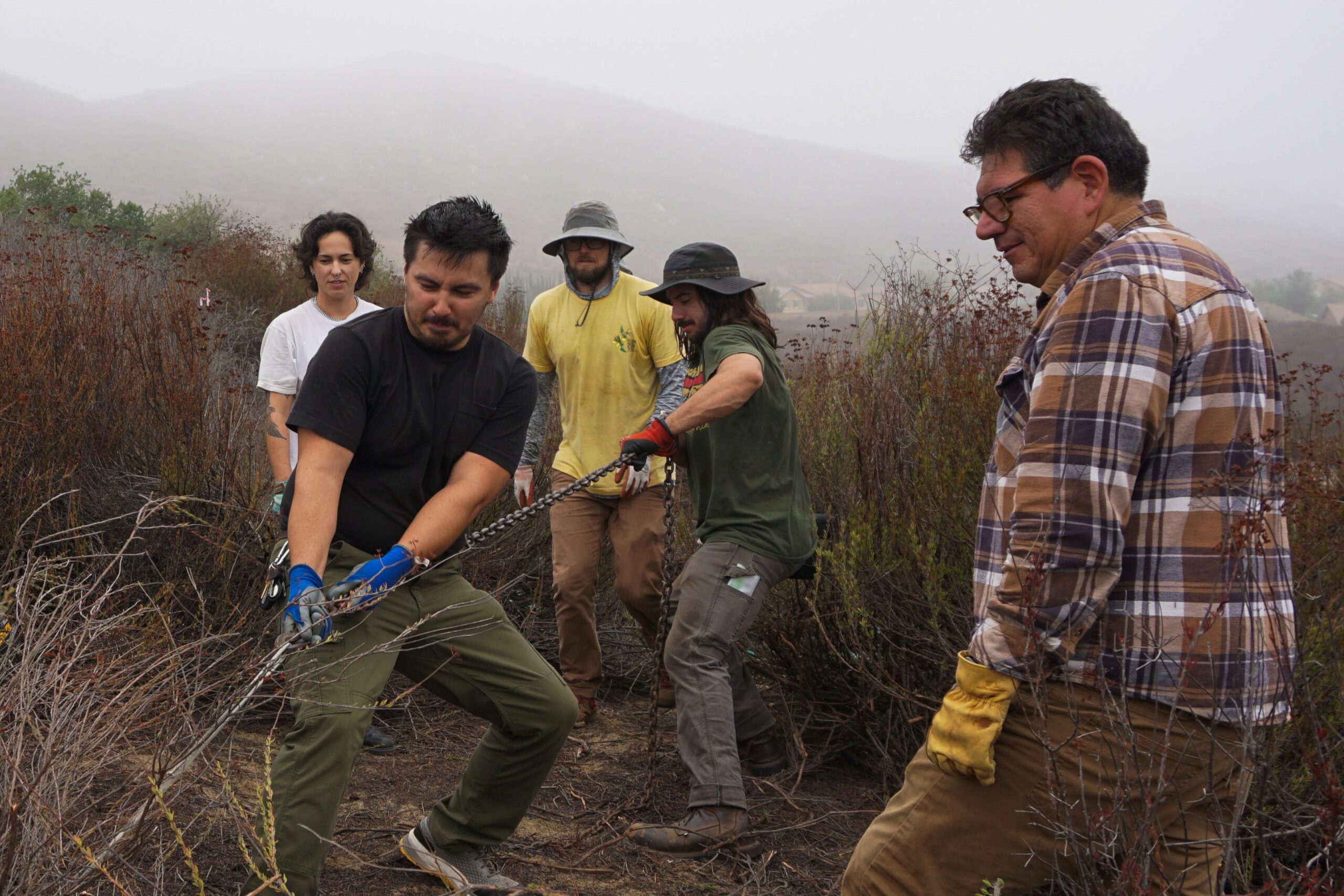
Bright smiles and keen attitudes set the tone for the day ahead as volunteers grabbed their gloves and trekked into the hills, prepared and ready to make a difference. Approximately 35 volunteers of all ages from around the Inland Empire gathered with rakes, buckets, and chains in hand to volunteer their time by collecting buckwheat seeds or pulling unwanted vegetation out of the ground by their roots.
Many of the natural processes that historically supported Delhi Sand Flower-Loving Fly habitat at the Reserve have been degraded over many decades. Over time, developments have altered natural wind patterns and sand availability that historically provided wind-blown sand in deposits in the Reserve. Without the replenishment of this wind-blown sand, the dunes begin to stabilize or are eroded faster than they are replaced by new sand deposition.
With this altered condition, open dune areas that historically provided fly habitat have become more dense with vegetation. For this reason, intervention through habitat management is necessary to restore and maintain suitable conditions. Management actions include removing mature woody shrubs from areas with high cover to generate more of the Delhi Sand flower-loving fly’s preferred open sand habitat.
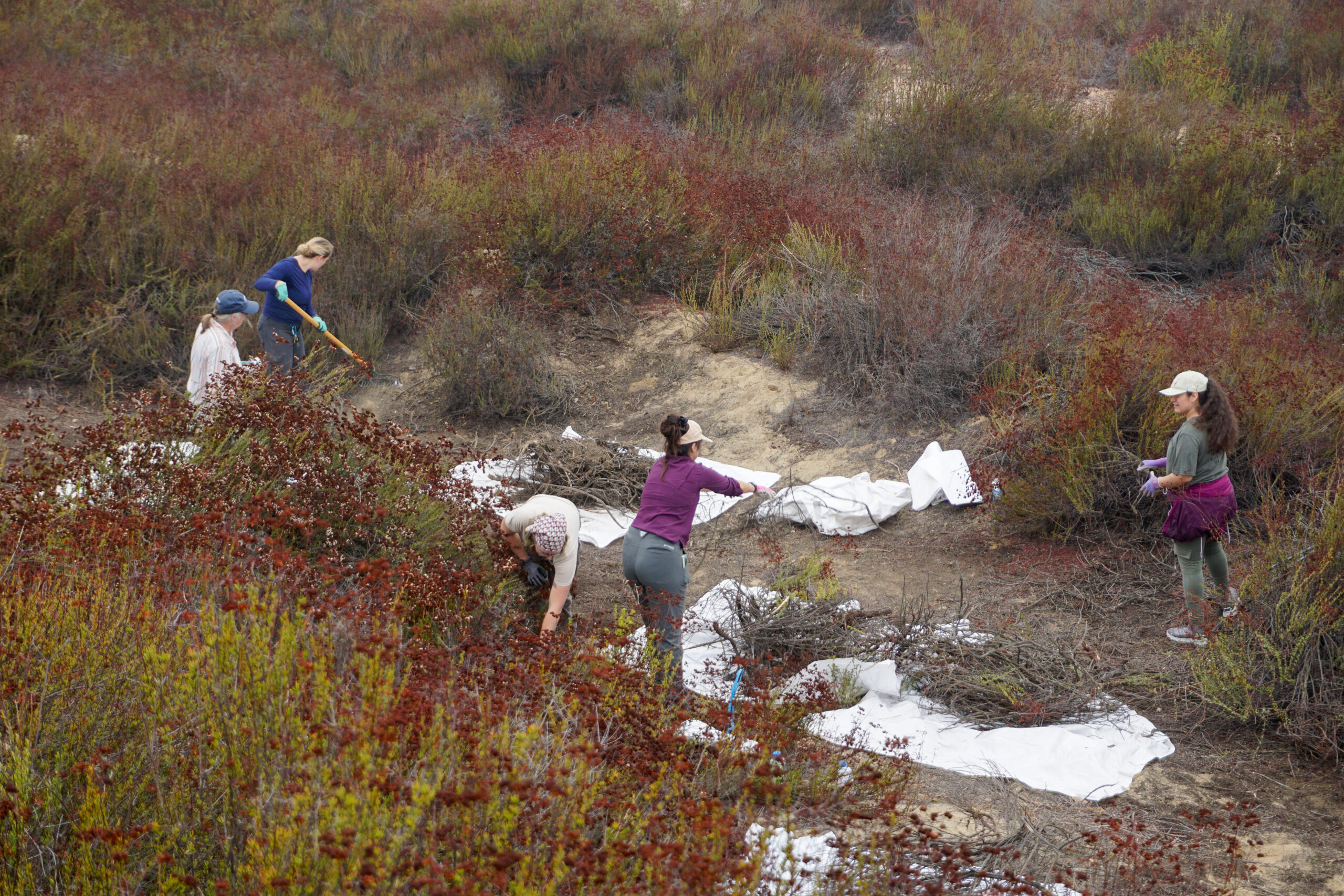
California buckwheat shrubs growing in dense stands within open sand habitat were selectively thinned to reduce the shrub cover, while leaving some plants in place to protect the dunes from excessive wind erosion.
After a day of work, about 70 pounds of California buckwheat seeds were collected for use in other restoration work and one ton of unwanted vegetation was removed from the Sand Dune habitat. Thank you to the volunteers and partners who helped make this event a success and we hope you’ll join us for the next one! Visit wrc-rca.org/subscribe/ to sign up for the Vista Newsletter and make sure you don’t miss the next event!