

Species Spotlight: Turkey Vulture
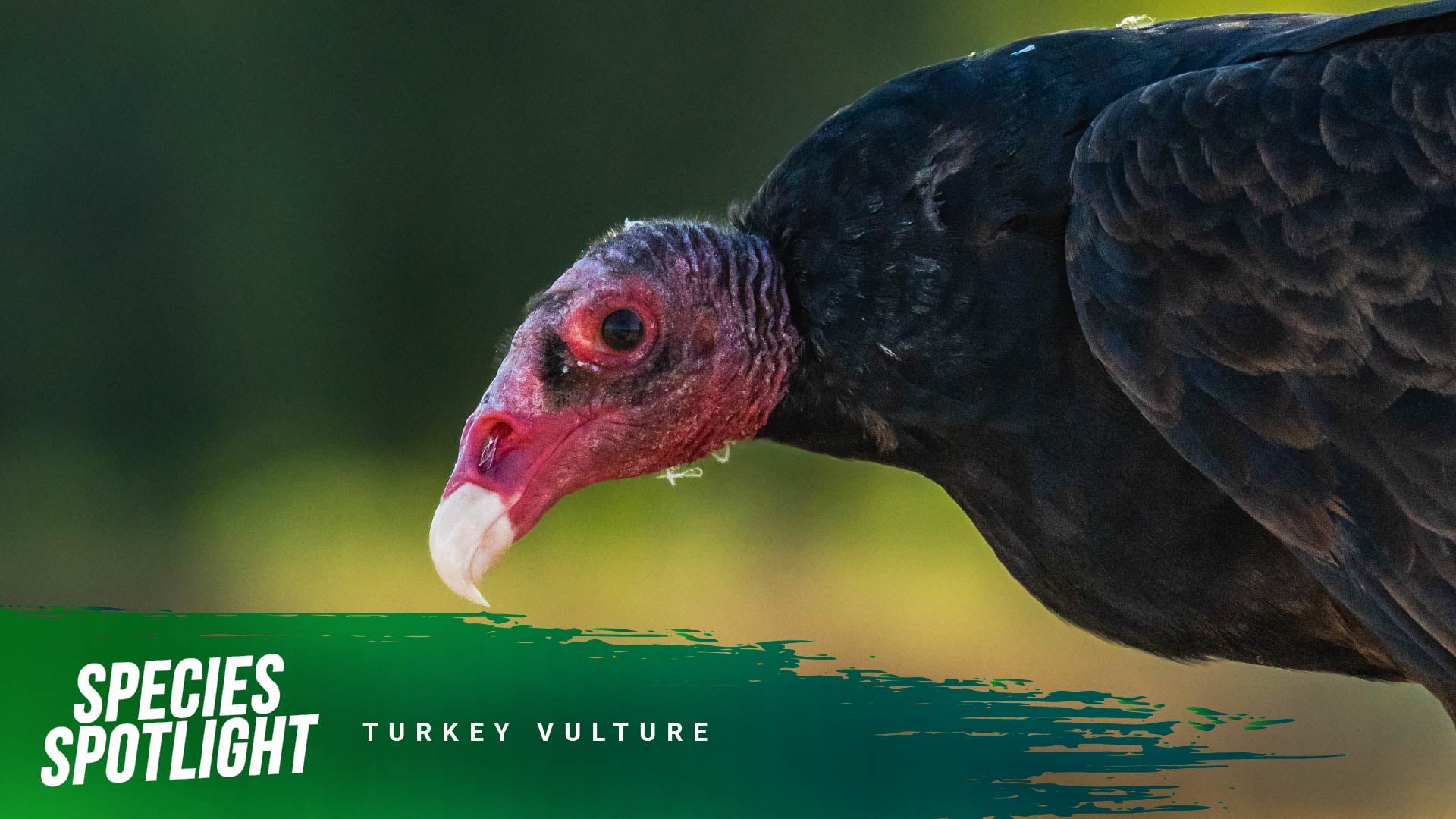
Thanksgiving is around the corner, and while you may be preparing for a turkey feast, the turkey vulture (Cathartes aura) is likely not the bird that comes to mind.
Recognizable by its distinctive featherless red head and characteristic V-shaped wing posture in flight, the turkey vulture uses a wide variety of habitats, including coastal sage scrub, grasslands, oak woodlands and forests, montane coniferous forest, playas and vernal pools, chaparral, desert scrub, and Riversidean alluvial fan sage scrub.
In Southern California, most turkey vulture pairs lay two eggs in early April. After an incubation period of 38 to 41 days, both parents care for the young, which leave the nest at roughly 60-80 days. Studies have shown that breeding birds exhibit a strong nest-site fidelity, often returning to the same or nearby alternate nest for six or more years.
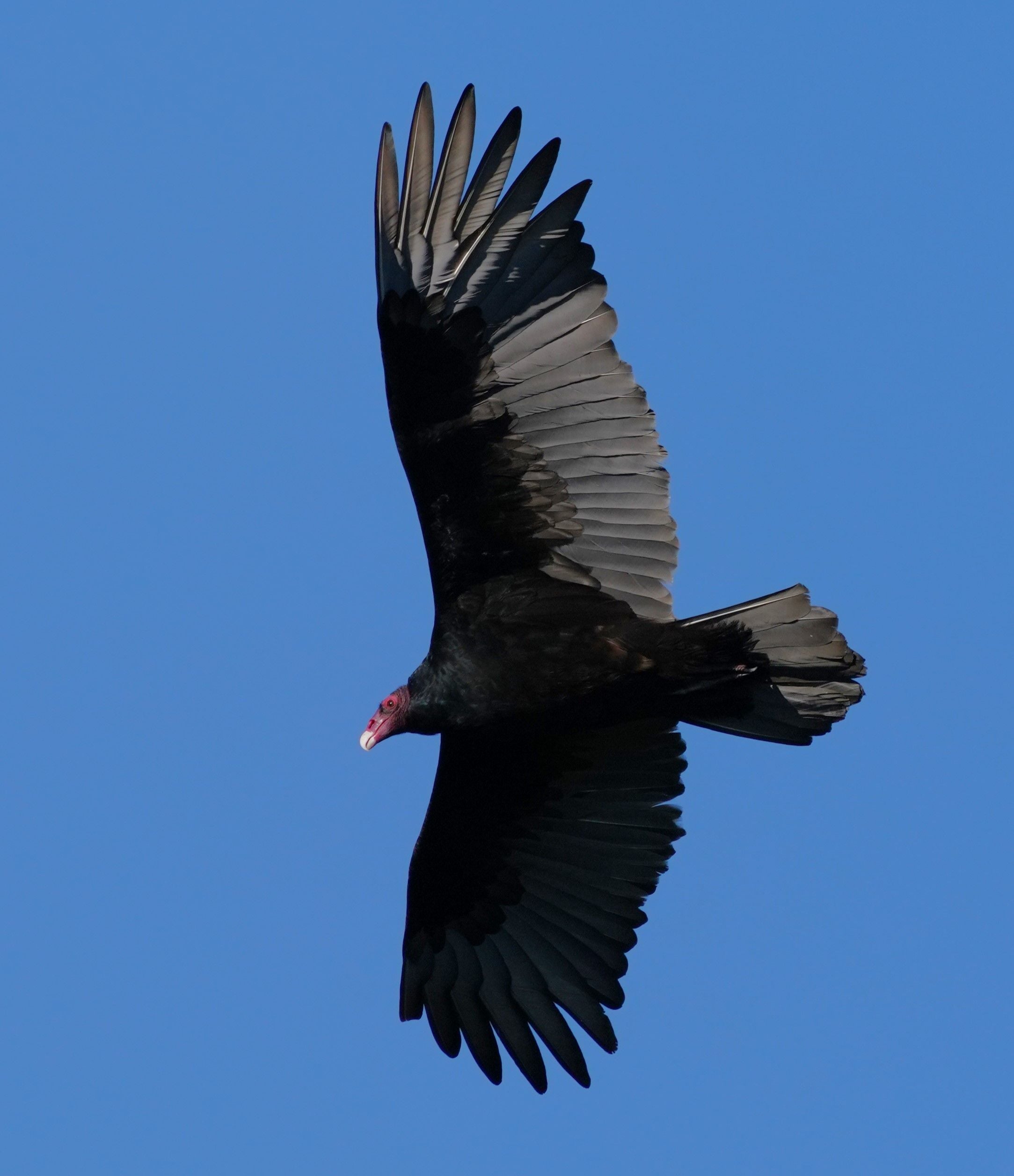
Turkey vultures play an important ecological role as nature’s clean-up crew, feeding primarily on the carcasses of wild and domestic animals. Unlike most birds, this opportunistic scavenger relies heavily on smell, often locating carrion while soaring high overhead. It has also been recorded taking food from young herons and other birds. Although turkey vultures can carry food short distances in their bills, they usually eat carrion where they find it or drag it only a few meters before feeding.
Turkey vultures have strict nest-site requirements, and only a few suitable nesting sites are located within the Multiple Species Habitat Conservation Plan (MSHCP) Plan Area. Under the MSHCP, two key nesting areas, in Rawson Canyon and the Bernasconi Hills, are conserved and managed to minimize disturbance within a one-mile radius.
Within a half-mile of each nest, human activity is restricted during the breeding season, February through September. Both nesting sites are monitored at least once every three years to confirm continued successful reproduction.
Beyond the nest sites, the MSHCP identifies more than 457,000 acres of foraging habitat, giving turkey vultures room to search for food across western Riverside County. So, this Thanksgiving, if you spot a dark bird rocking side to side on the wind overhead, give a nod to the turkey that keeps our landscapes clean.